Imagine watching samba dancers in Brazil, admiring glowing diyas in India and discovering New Year traditions in Thailand—all through one journey of learning. The biggest festivals in the world offer much more than spectacular photographs. Behind the music, decorations and shared meals are stories that reveal what communities cherish and pass on to younger generations.
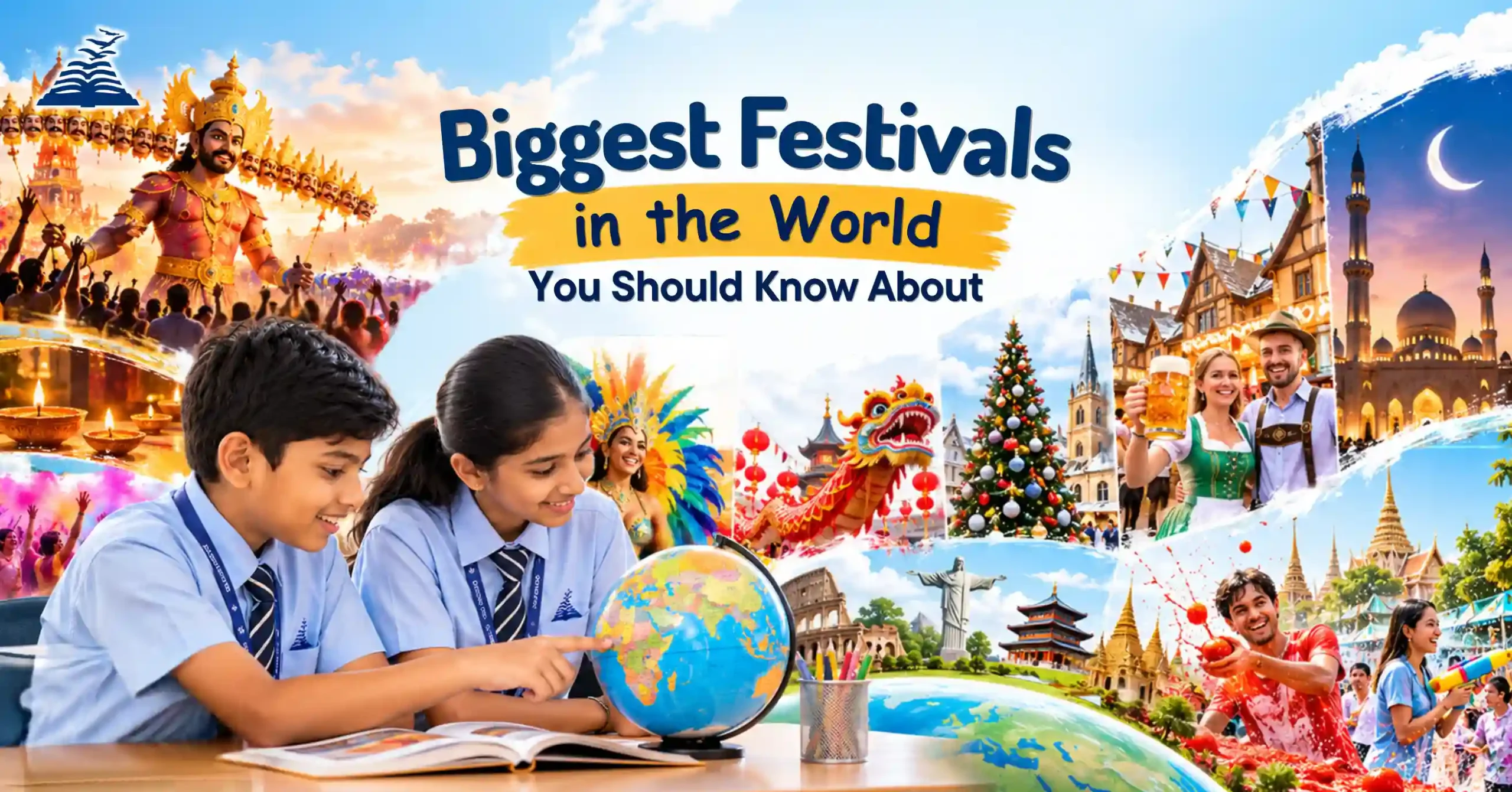
Table of Contents
Why Festivals Are an Important Part of World Cultures
The importance of festivals lies in the connections they create. Families reunite, communities preserve traditions, and people express gratitude, faith or hope. Children can discover how celebrations reflect local history while recognising familiar values, such as generosity and togetherness, across different cultures.
Discover 10 Famous Festivals Around the World
These famous festivals around the world introduce a variety of religious traditions, community gatherings and seasonal celebrations. The list is a starting point for exploration, rather than an official ranking by size or popularity.
Dussehra: Celebrating the Victory of Good Over Evil
Understanding festivals and their significance begins with the stories behind them. Dussehra celebrates good overcoming evil, including Rama’s victory over Ravana and traditions honouring Durga’s victory over Mahishasura. Ramlila performances, effigy burning and Mysuru’s Dasara festivities show how celebrations differ across India.
Diwali: India’s Festival of Lights
Diyas glowing outside homes, colourful rangoli and plates of sweets make Diwali instantly recognisable. Families gather for worship, exchange gifts and celebrate themes of light, hope and renewal. Its stories and observances vary across regions and religious communities, offering children an opportunity to explore India’s diversity.
Rio Carnival: Brazil’s Celebration of Samba and Colour
Rio Carnival demonstrates how cultural festivals bring music, performance and community creativity together. Samba schools prepare elaborate costumes, floats and choreography for their parades. Street celebrations add another dimension, turning public spaces into lively gathering places filled with dance and rhythm.
Chinese New Year: Welcoming New Beginnings
Chinese New Year is one of the cultural celebrations associated with the wider Lunar New Year season. Reunion meals, red decorations and gift envelopes express wishes for happiness and prosperity. Families maintain their own customs, while Chinese communities around the world keep these traditions alive.
Christmas: Traditions and Celebrations Around the World
Among the most popular festivals in the world, Christmas commemorates the birth of Jesus Christ. Church services, carols, decorated trees and family meals feature in many celebrations. Learning about Christmas also opens conversations about generosity, hospitality and the different ways families observe the occasion.
Holi: India’s Festival of Colours
Holi welcomes spring with colourful celebrations, music and gatherings. Holika Dahan, observed before the colour festivities, recalls the story of Prahlad and Holika. Regional traditions add different songs, foods and customs. Children can explore its stories while learning to respect others’ comfort during celebrations.
Oktoberfest: Munich’s Celebration of Bavarian Culture
Munich’s Oktoberfest grew from festivities marking a royal wedding in 1810. Today, it combines Bavarian traditions, music, food, beer tents and fairground attractions. Despite its name, the event usually begins in September and continues into early October. Traditional clothing and folk performances remain distinctive features.
Eid al-Fitr: Celebrating the End of Ramadan
Eid al-Fitr marks the end of Ramadan, the Islamic month of fasting. Special prayers, festive meals, visits and greetings bring families and communities together. Giving through Zakat al-Fitr highlights concern for people in need. Its date follows the Islamic calendar and local moon-sighting arrangements.
La Tomatina: Spain’s Famous Tomato Festival
On the last Wednesday of August, Buñol in Spain hosts La Tomatina, its famous tomato-throwing event. Streets become the setting for an organised, playful gathering that attracts international attention. It introduces children to a different kind of festival: a local tradition recognised for its unusual community spectacle.
Songkran: Thailand’s Traditional New Year Festival
Songkran marks Thailand’s traditional New Year in mid-April. Water celebrations accompany temple visits, family reunions and respectful water-pouring rituals for elders. These practices express renewal, goodwill and respect between generations. UNESCO recognises Songkran as part of humanity’s intangible cultural heritage.
Kumbha Mela: A Grand Gathering of Faith, Culture and Spirituality
Kumbha Mela is one of the world’s largest religious gatherings, bringing millions of pilgrims together in a celebration of faith and spiritual renewal. Held periodically at Prayagraj, Haridwar, Nashik and Ujjain, the festival centres on bathing in sacred rivers, a ritual devotees believe cleanses sins and supports their journey towards liberation. Beyond its religious significance, the gathering brings together people from diverse backgrounds, reflecting India’s rich cultural traditions and shared devotion. Recognised by UNESCO as an Intangible Cultural Heritage of Humanity in 2017, Kumbha Mela offers a remarkable glimpse into the enduring connection between pilgrimage, community and spiritual belief.
World Festival Calendar: Locations, Seasons and Key Traditions
Use this calendar as a general guide. Dates for festivals linked to lunar or lunisolar calendars change each year.
| Festival | Main location or community | Usual timing | Key traditions |
| Dussehra | India | September–October | Ramlila, regional processions |
| Diwali | India and diaspora communities | October–November | Diyas, rangoli, worship |
| Rio Carnival | Rio de Janeiro, Brazil | February–March | Samba parades, street festivities |
| Chinese New Year | China and Chinese communities | January–February | Reunion meals, red envelopes |
| Christmas | Worldwide | Usually 25 December | Services, carols, family gatherings |
| Holi | India and diaspora communities | February–March | Colours, Holika Dahan |
| Oktoberfest | Munich, Germany | September–October | Bavarian music, food, fairgrounds |
| Eid al-Fitr | Muslim communities worldwide | Changes annually | Prayers, charity, shared meals |
| La Tomatina | Buñol, Spain | Last Wednesday of August | Tomato throwing |
| Songkran | Thailand | Mid-April | Water rituals, respect for elders |
| Kumbha Mela | India | Periodical | Bathing in sacred rivers |
What Children Can Learn from Festivals Across Cultures
Parents exploring top schools in Bangalore East can ask how cultural learning goes beyond costumes and decorations. Stories, maps, music and thoughtful discussions help children understand the people behind each celebration.
When comparing the best CBSE schools in Bangalore, look for inclusive activities that encourage curiosity and respect. Children can locate festivals on a map, compare calendars or interview family members about traditions.
Simple classroom activities include:
- Creating a world festival scrapbook.
- Comparing two celebrations with similar themes.
- Learning greetings and their meanings.
- Discussing how traditions differ between families.
Discover Cultures, Broaden Horizons at Presidency School Bangalore East
Every festival tells a story about the people, traditions and values behind it. Exploring celebrations from around the world gives children a chance to appreciate cultural diversity and recognise the joy of community. Presidency School Bangalore East encourages this spirit of curiosity through education that connects academic learning with a broader understanding of the world. With an emphasis on knowledge, creativity and respect for others, the school helps young learners grow with confidence and an appreciation for perspectives beyond their own.
Conclusion
A diya, a samba rhythm or a New Year greeting can spark curiosity about people and places far from home. Exploring famous festivals around the world helps children appreciate both shared values and the traditions that make each community distinctive. Let their questions guide further discovery through stories, music and conversations with family members. Learning why people celebrate can turn an unfamiliar festival into an opportunity for understanding, respect and connection.