A missed deadline, a disagreement with a friend or the temptation to follow a risky online trend can become an important learning moment. As children approach Class 10, they need opportunities to practise handling these situations. Developing life skills for students helps them take responsibility, ask for support and approach everyday challenges with growing confidence.
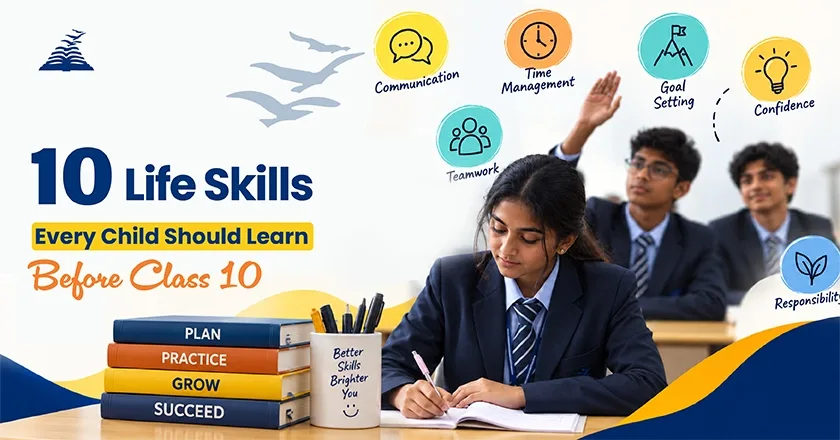
Table of Contents
Why Life Skills Matter Beyond Academic Success
School years prepare children for relationships, choices and responsibilities alongside examinations. Through life skills education, students can learn to communicate clearly, consider consequences and understand other people’s perspectives. CBSE’s teacher resources encourage schools to build these abilities through classroom learning.
These abilities develop gradually. Class 10 is a useful point to reflect on progress, while recognising that every child needs a different level of guidance.
10 Essential Life Skills for Students Before Class 10
This Top 10 Life Skills guide connects each skill with situations children recognise at home, in school and among friends.
1. Effective Communication and Active Listening
Expressing a doubt, asking for help and listening without interrupting are important life skills for students. Encourage children to explain what they need respectfully and check that they have understood someone else.
Try a conversation where each person summarises what the other said before responding.
2. Critical Thinking and Problem-Solving
Among the Essential Life Skills, critical thinking helps children examine information before accepting it. Problem-solving involves identifying a difficulty, considering options and trying a workable solution.
When a project fails, ask: “What happened? What could you change? How will you know whether it works?”
3. Responsible Decision-Making and Handling Peer Pressure
Children need practice making choices that reflect their values and safety. Discuss the possible consequences of copying homework, excluding a classmate or joining an unsafe challenge.
Rehearse a simple response: “I’m not comfortable with that.” Remind them they can leave and approach a trusted adult.
4. Time Management and Goal Setting
A practical weekly plan helps students see how homework, hobbies, rest and family time fit together. Encourage small, specific goals, such as revising one topic or completing a project outline.
Let children estimate how long tasks will take, then adjust their plans after trying them.
5. Emotional Awareness and Stress Management
Children should learn to recognise feelings such as frustration, nervousness and disappointment. Naming an emotion can open a conversation about what they need.
Practise pausing before reacting, taking a short break and talking to someone supportive. Encourage them to tell a trusted adult when stress feels difficult to manage.
6. Empathy, Teamwork and Conflict Resolution
Life skills for kids include noticing how others feel and contributing fairly to shared work. Group activities offer opportunities to divide responsibilities, listen to different ideas and negotiate disagreements.
After an argument, help children describe what happened, hear the other person and suggest a fair next step.
7. Financial Literacy: Budgeting, Saving and Spending Wisely
Begin with everyday choices: distinguishing needs from wants, comparing prices and saving towards a small goal. A practice budget can make these ideas concrete.
For example, with ₹200, a child could set aside ₹50 for savings and plan the remaining ₹150. Reviewing purchases together makes spending decisions easier to understand.
Also Read: Financial Skills Learning at Best School in Bangalore East
8. Digital Literacy and Online Safety
Children need to check information sources, protect personal details and think before posting. Teach them to keep passwords private, question unfamiliar links and ask permission before sharing someone’s photograph.
Agree on device routines together. If online contact feels upsetting or unsafe, they should tell a trusted adult.
9. Everyday Independence and Personal Safety
Packing a school bag, maintaining hygiene and organising belongings are basic life skills that grow through practice. Gradually introduce simple household tasks with suitable supervision.
Children should also know how to contact a caregiver, follow road-safety rules, express personal boundaries and seek help when something feels wrong.
10. Adaptability and Resilience When Facing Setbacks
A disappointing result or an unexpected change can be upsetting. Give children time to acknowledge that feeling, then help them consider what remains within their control.
Ask: “What did you learn, and what could you try next?” Recognise effort, useful changes and willingness to seek help.
How Parents and Schools Can Help Children Practice Life Skills Every Day
Daily routines provide opportunities to practise. Adults can:
- Offer manageable choices and responsibilities.
- Explain their own decisions and acknowledge mistakes.
- Use role-play to practise difficult conversations.
- Allow safe mistakes, followed by calm reflection.
- Adapt tasks to each child’s abilities and support needs.
When visiting a CBSE school in Bangalore East, ask how group projects, student responsibilities and classroom discussions help learners apply these skills.
Families comparing the top schools in Bangalore can also ask how teachers share progress beyond marks. Specific examples of cooperation, independent planning and thoughtful decisions reveal how children are growing.
Start with one everyday habit, practise it consistently and build from there.
Presidency School Bangalore East: Preparing Students for Life Beyond the Classroom
Before students reach Class 10, they need more than academic knowledge—they also need practical life skills that help them make decisions, communicate clearly, manage responsibilities, and adapt to challenges. At Presidency School Bangalore East, learners are encouraged to develop essential abilities such as communication, critical thinking, time management, emotional awareness, teamwork, financial literacy, digital responsibility, problem-solving, independence, and resilience. These skills are strengthened through classroom experiences, collaborative activities, leadership opportunities, real-life learning situations, and guided reflection. By giving equal importance to character, confidence, and capability, Presidency School Bangalore East helps students grow into responsible, self-aware, and future-ready individuals who are better prepared for higher studies and life beyond school.
Conclusion
Life skills are built through everyday choices, conversations, responsibilities and experiences—not through a single lesson. Before Class 10, children benefit from learning how to communicate clearly, think critically, manage time, handle emotions, make responsible decisions, use technology safely, manage money sensibly and recover from setbacks. Parents and schools play an important role by giving students age-appropriate opportunities to practise these abilities in real situations. The aim is not to make children completely independent overnight, but to help them become steadily more capable, thoughtful and responsible. When life skills grow alongside academic learning, students are better prepared to face higher studies, relationships and future challenges with greater confidence and maturity.