School holidays are meant for rest, play, family time and new experiences. Yet without the structure of classes and homework, students may spend far more time scrolling through reels, chatting, gaming or watching videos. A few minutes online can quietly turn into several hours.
Understanding social media addiction in students can help families build healthier holiday habits without treating every screen as a problem. The real goal is balance: giving students space to enjoy technology while protecting time for sleep, movement, learning and real-world experiences.
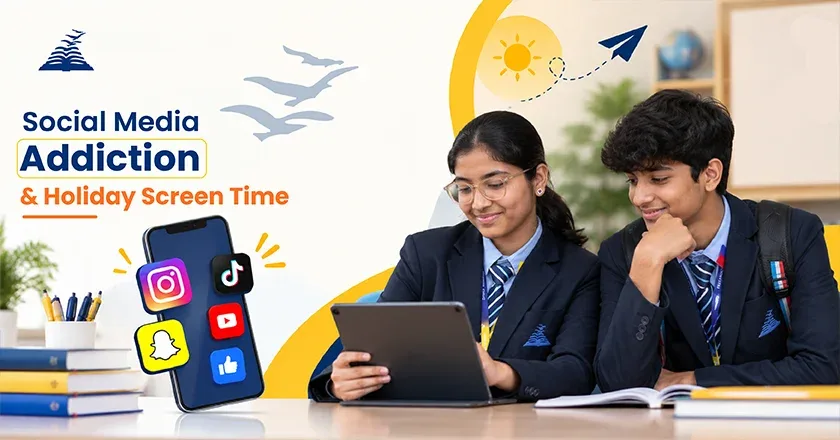
Table of Contents
What Is Social Media Addiction in Students?
Social media addiction describes a pattern in which students find it difficult to control how often or how long they use social platforms. They may repeatedly check their phones, feel uncomfortable when disconnected or continue scrolling even when it interferes with other activities.
The relationship between social media and students does not have to be negative. Digital platforms can support communication, creativity and learning when students use them with awareness and reasonable boundaries.
Why Does Social Media Use Increase During School Holidays?
School holidays remove the structure of classes, homework, commutes, and extracurricular schedules, leaving students with more unplanned time.
More Free Time and Fewer Daily Routines
Without regular routines, students have longer undefined periods that social media can easily fill.
Boredom and Easy Access to Digital Devices
When boredom meets an easily accessible phone, scrolling often becomes the simplest default activity.
Staying Connected with Friends Online
With friends following different holiday schedules, social media helps students maintain peer connections when face-to-face interaction is limited.
Entertainment Through Short Videos, Games and Social Platforms
Short videos, games, and social platforms are designed to sustain engagement, making stopping difficult.
Common Signs of Excessive Social Media Use in Students
Warning signs include constant phone checking, reduced concentration, later bedtimes, poorer sleep, and less family interaction. Clear screen-time limits, screen-free periods, appealing offline activities, and open conversations can help restore balance without creating conflict.
Difficulty Controlling Screen Time
A student may plan to use a device for twenty minutes but continue for an hour or more. Managing screen time becomes important when stopping begins to feel difficult.
Constantly Checking Notifications
Repeatedly checking messages or notifications can interrupt conversations, meals, reading and other tasks.
Losing Interest in Offline Activities
Students may gradually lose enthusiasm for sports, hobbies, books or activities they previously enjoyed.
Staying Online Late at Night
Late-night scrolling can push bedtime further back and make mornings more difficult.
Irritability When Devices Are Taken Away
Some students may become unusually frustrated when asked to put their phones aside. This behaviour may indicate that device use needs closer attention.
How Excessive Social Media Use Can Affect Students
Excessive social media use can affect students’ concentration, sleep, physical activity, emotional well-being, and daily routines. Frequent notifications and scrolling may reduce academic focus, while late-night use can disturb sleep and energy levels.
Reduced Focus and Concentration
Frequent alerts and rapid content switching can make sustained attention harder. Social media distraction for students may become particularly noticeable while reading, revising or completing a task.
Disrupted Sleep Patterns
Using phones late at night may delay bedtime and reduce the amount of restful sleep students receive.
Less Physical Activity
Long periods spent indoors with devices can replace walking, cycling, sports and outdoor play.
Reduced Time for Learning and Hobbies
The balance between social media and productivity matters during holidays because entertainment should not completely replace hobbies, reading, skill development or simple revision.
Impact on Emotional and Social Well-Being
The impact of social media on students may include comparison, fear of missing out or pressure to keep up with what others appear to be doing online.
How Much Screen Time Is Too Much During School Holidays?
Here’s an age-wise table you can drop straight into that section, along with the honest caveat that makes it credible rather than just another list of made-up numbers.
| Age Group | Recreational Screen Time | Source & Notes |
| 5–10 years | Under 2 hours a day, total | The Indian Academy of Pediatrics is the most specific here: exposure should be limited to a maximum of one hour of supervised screen time per day for children 24–59 months age, and less than two hours per day for children 5–10 years age, with screen time never replacing outdoor play, sleep, or family interaction. |
| 11–14 years | No official hard cap—roughly 2 hours a day | Neither WHO nor IAP publishes a strict hour figure for this bracket; the American Academy of Pediatrics has moved away from fixed numbers toward a “5 Cs” framework—Child, Content, Calm, Crowding Out, and Communication—that asks whether screen use is displacing sleep, play, or family time. IAP guidance for this age focuses on delaying social media |
| 15–18 years | No fixed ceiling—guided by a family media plan, with roughly 2 hours a day | Same “5 Cs” approach applies, with more teen input into the plan. IAP’s guidance shifts almost entirely to quality markers here—protecting 8–10 hours of sleep, keeping devices out of the bedroom at night, and watching for recreational use crowding out exercise or in-person time. |
Screen Time Is Not All the Same: Quality Matters Too
Not every hour spent on a device has the same purpose. A student using a laptop to learn coding is having a different experience from someone scrolling continuously through short videos.
Educational Screen Time
Educational videos, online courses, digital reading and research can make technology a valuable learning tool.
Creative and Productive Screen Time
Writing, designing, coding, photography or editing videos can help students use technology actively rather than simply consume content.
Entertainment and Social Media Screen Time
Entertainment is also part of a healthy holiday. The key is ensuring that recreational use does not dominate the entire day.
How Students Can Balance Social Media and Screen Time During Holidays
School holidays are ideal for rest, fun, and exploration, but social media should not dominate the day. Students can balance screen time by setting fixed social media hours and following a routine that includes reading, hobbies, exercise, outdoor play, family time, and relaxation.
Create a Flexible Daily Holiday Routine
Students can divide the day into broad periods for outdoor activities, hobbies, rest, learning and entertainment without creating an overly strict timetable.
Set Clear Times for Social Media Use
Choosing fixed periods for checking social apps can reduce repeated, unplanned scrolling throughout the day.
Keep Mornings and Bedtime Screen-Free
Starting and ending the day away from social media can encourage better routines and calmer sleep habits.
Turn Off Unnecessary Notifications
Muting non-essential notifications reduces the urge to check the phone every few minutes.
Take Regular Digital Breaks
A short digital detox for students may involve setting aside a few hours for outdoor play, reading or family activities without phones.
Keep Phones Away During Meals and Family Time
Device-free meals make space for conversation and help students become comfortable being disconnected for short periods.
Productive Alternatives to Social Media During School Holidays
Some of the productive alternative that can keep the children away from screens are:
Read Books and Newspapers
Reading strengthens vocabulary, comprehension and general awareness while offering a relaxing break from screens.
Learn a New Skill or Hobby
Holidays are ideal for trying music, cooking, gardening, coding, photography or another personal interest.
Also Read: 10 Life Skills Every Child Should Learn Before Class 10
Play Sports and Spend Time Outdoors
Outdoor activity can improve fitness, provide social interaction and naturally reduce device use.
Try Art, Music and Creative Activities
Painting, writing, crafts and music give students opportunities to create something of their own.
Spend Quality Time with Family and Friends
Family outings, board games and face-to-face conversations create experiences that online interactions cannot fully replace.
How Parents Can Help Students Develop Healthy Digital Habits
Parents can support children without making technology feel like an enemy. Families associated with best CBSE schools in Bangalore can reinforce at home the same values of responsibility, independence and balanced development encouraged through school life.
Set Clear and Consistent Digital Boundaries
Agree on realistic expectations for when devices can be used and when they should be kept aside.
Create Screen-Free Zones at Home
Dining areas and bedrooms can become spaces where phones are used less frequently.
Encourage Meaningful Offline Activities
Children are more likely to put devices aside when they have interesting alternatives available.
Talk Openly About Responsible Social Media Use
Instead of relying only on restrictions, parents can discuss privacy, online behaviour, misleading content and healthy social comparison.
Model Healthy Screen Habits
Children notice how adults use devices. Parents who put phones away during meals and conversations provide a practical example.
How to Create a Healthy Screen-Time Routine for School Holidays
A balanced routine can include waking up at a reasonable time, getting some physical activity, completing one productive task, enjoying hobbies and setting aside limited periods for social media.
Students studying at top CBSE Schools in Bangalore East can benefit when time-management habits developed at school are continued at home during longer breaks.
When Should Parents Be Concerned About Their Child’s Social Media Use?
Parents may need to pay closer attention when online use regularly interferes with sleep, eating habits, school responsibilities, family interaction or activities the child once enjoyed. Persistent distress when devices are unavailable may also deserve a calm conversation and, where necessary, professional support.
How Students Can Maintain Healthy Digital Habits After the Holidays
Healthy habits should not disappear when school reopens. Students can continue using planned social media periods, keep phones away while studying and avoid screens close to bedtime.
The aim is not to remove technology from a student’s life. It is to ensure that social media addiction in students does not replace the experiences, relationships and activities that are equally important for growing up.
Presidency School Bangalore East: Creating a Healthier Balance Between Screens and Summer Holidays
When school holidays begin, extra free time can quickly turn into excessive scrolling, gaming, and social media use unless students follow a healthy routine. At Presidency School Bangalore East, learners are encouraged to enjoy technology responsibly while also making time for physical activity, reading, hobbies, creative learning, social interaction, and adequate rest. Simple habits such as setting screen-free hours, avoiding devices during meals, planning offline activities, and using digital platforms with purpose can help students stay productive without feeling restricted. By promoting balanced technology use and responsible digital choices, Presidency School Bangalore East supports students in developing better focus, self-discipline, well-being, and healthier habits that continue beyond the holidays.
Conclusion
Healthy screen habits during school holidays are not about removing technology completely, but about helping students use it with greater awareness and control. When social media begins to interfere with sleep, physical activity, hobbies, family time or concentration, it is a sign that routines may need to change. Simple steps such as setting fixed usage times, turning off unnecessary notifications, keeping meals and bedtime screen-free, and choosing meaningful offline activities can make a real difference. Parents can support this process by setting consistent boundaries, discussing digital behaviour openly and modelling balanced device use themselves. With the right guidance, students can enjoy social media without allowing it to dominate their holidays or replace the real-world experiences that support healthy growth.